
 Quick Response
Flood, Fire, Mold Services
 GET HELP FAST
30 Minute Response Time
Quick ResponseFlood, Fire, Mold Services
GET HELP FAST30 Minute Response Time
Water damage is one of those problems that rarely starts out obvious. It builds quietly, behind walls, under floors, inside ceiling cavities, until the damage has spread far beyond the original source. For Tehachapi homeowners, catching the early warning signs is the best way to stay ahead of a situation before a minor issue becomes a costly water damage restoration project.
This guide walks through the most common warning signs so you can recognize the problem early and know when to call in a professional.
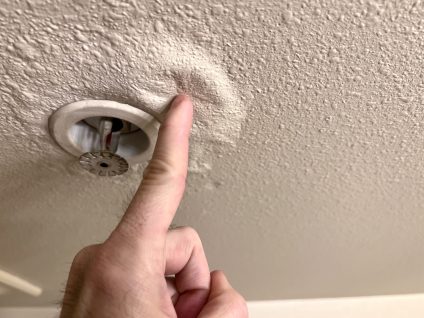
One of the first visible clues is a yellowish or brownish stain appearing on a wall or ceiling. These stains form when moisture soaks through building materials and leaves mineral deposits behind as it dries. A single stain warrants immediate investigation.
What makes these stains tricky is that they can appear far from the actual source. Water moves along framing and structural materials before it shows up on a surface, so a ceiling stain might trace back to a pipe, roof drain, or appliance that sits several feet away.
Do not assume a stain from a past leak is no longer active. If the stain feels soft, wet to the touch, or is growing in size, the source is still causing damage. Water damage restoration professionals often find that surface stains are just the beginning of a much larger hidden problem.
When moisture gets trapped behind paint or wallpaper, it breaks the bond between the material and the wall surface. The result is paint that peels, blisters, or bubbles, and wallpaper that starts to lift at the seams or sag in the middle.
This type of damage is common around windows, in bathrooms, and near exterior walls. It shows up when condensation or water intrusion is consistent enough to affect adhesion over time.
If you see this in a room without an obvious water source nearby, it is worth checking for a slow pipe leak, poor window sealing, or moisture coming through the exterior wall.
Flooring is highly sensitive to moisture. Wood floors expand when they absorb water and can cup, buckle, or develop a wavy appearance when moisture is significant or prolonged. Vinyl and laminate flooring can also lift or bubble when water gets underneath.
Pay attention to soft spots in hardwood or subfloor that feel spongy underfoot. These often indicate that moisture has been sitting long enough to begin breaking down the structural layer beneath the surface finish.
In some homes, flooring changes can be subtle at first. A slight unevenness or a floor that creaks differently than it used to can be an early indicator. A water damage restoration assessment can confirm whether the subfloor has been compromised.
Mold and mildew need moisture to grow, and they often begin developing in hidden spaces before becoming visible. The musty smell associated with active mold growth is one of the clearest signs that water has been sitting long enough to cause a biological problem.
If a room smells musty despite regular cleaning and ventilation, the odor is most likely coming from inside a wall cavity, under flooring, or in a crawlspace. Musty odors that get stronger after it rains or after running appliances like the dishwasher or washing machine suggest the moisture source is tied to plumbing or roof drainage.
When water damage goes unaddressed, every passing day increases the likelihood of mold spreading. Quick action is essential to protecting your property and keeping any future water damage restoration work as manageable as possible.
Mold is a reliable indicator that a moisture problem has been ongoing. It can appear as black, green, white, or gray spots in corners, along grout lines, around window frames, or on walls and ceilings. In some cases, mold appears first on surfaces where humidity collects, like beneath sinks, behind appliances, or along poorly ventilated walls.
Spotting visible mold should be treated as confirmation that a moisture issue exists and has been present long enough for growth to take hold. The visible portion is often just a fraction of what is growing out of sight.
A water bill that spikes without any change in household usage is a strong signal that water is escaping where it shouldn’t. Hidden pipe leaks are a common culprit and often go unnoticed for weeks or months because they occur inside walls, under concrete, or in crawl spaces.
Track your monthly water usage over time. If consumption jumps noticeably and your habits have not changed, consider having a plumber inspect your supply lines for leaks before the problem causes structural damage.
Corrosion on exposed pipes, connections, or around the base of fixtures is a sign that water has been making consistent contact with metal surfaces. In some cases, this happens from condensation rather than an active leak, but corrosion at a joint or fitting usually indicates the connection is not fully sealed.
Periodically checking under sinks, around water heater connections, and near shut-off valves can help you catch these issues early. Proactive attention here can prevent a drip from escalating into a full water damage restoration situation.
A ceiling that appears to sag, bow, or look waterlogged is a structural concern and a safety hazard. Drywall that absorbs significant moisture can become heavy and unstable. In severe cases, a saturated ceiling section can collapse.
If a ceiling shows signs of sagging, avoid standing directly beneath it. The water pooling above may indicate a broken pipe, roof leak, or appliance leak from an upper floor. This type of damage typically requires immediate water damage restoration to prevent further structural deterioration.
Recognizing these warning signs early gives homeowners the best chance to limit damage and reduce repair costs. Whether you have noticed staining, odors, buckled flooring, or any other sign listed here, the right step is to get a professional assessment as quickly as possible.
Tehachapi homeowners can find more local information by exploring our East Kern restoration resources.
Contact Alert Disaster Restoration today for a free inspection. Our team is ready to identify the source, document the damage, and begin restoring your home to the best possible condition.